2025-12-01
Russia's Leningrad, Kursk and Smolensk nuclear power plants (affiliated with Rosatom State Atomic Energy Corporation) have achieved remarkable results in cobalt-60 production, exceeding their annual production and shipment targets by 111%. Cobalt-60 is widely used in medical device sterilization, food shelf-life extension, polymer material modification, and environmental problem solving.
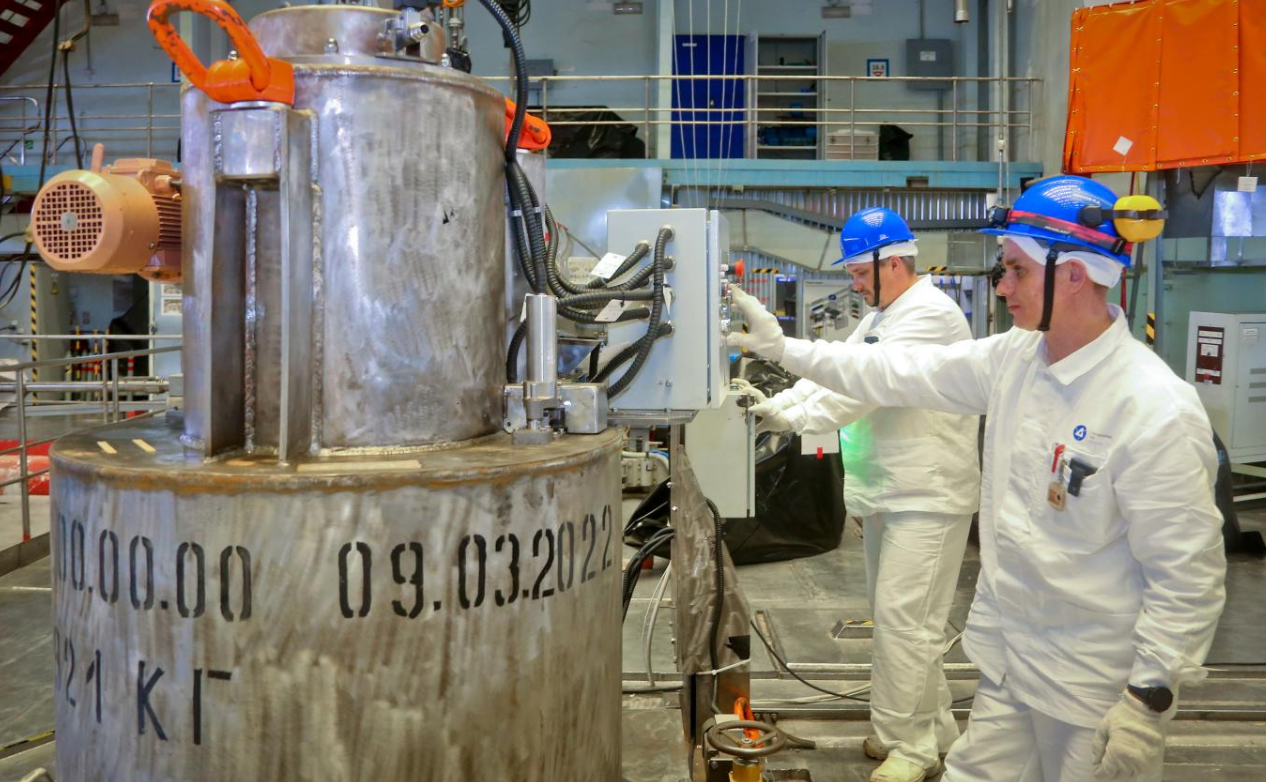
Nikita Konstantinov, Deputy CEO of Rosatom, stated that developing new products and increasing international market share are the company's strategic objectives. Currently, the company is a major global isotope producer, holding 30% of the global cobalt-60 sterilization market share, and is expanding its isotope range to support the development of nuclear medicine in Russia. Cobalt isotope production serves as a model for new product development in the power industry and demonstrates optimal utilization of RBMK-1000 pressure tube reactors. These reactors can produce high-value products on a large scale while ensuring safety and power generation capabilities.
Leningrad Nuclear Power Plant pioneered in this field nearly 30 years ago and now produces general and medical isotopes, as well as conducts silicon nuclear doping. According to Factory Director Vladimir Pereguda, when the project started in the 1990s, it produced about 600,000 curies of cobalt isotope annually. Today, the output has increased several times, thanks to growing market demand and good reputation. In 2025, the plant not only delivered commercial batches of cobalt-60 ahead of schedule but also completed production plans for iodine-131 and samarium-153, entered the final stage of molybdenum-99 production, and produced test batches of lutetium-177. Currently, Rosatom produces medical isotopes and silicon alloys only at the Leningrad Nuclear Power Plant, but plans to expand to the Kursk and Smolensk nuclear power plants. The commissioning of new facilities will double domestic production of radioactive drugs and begin production of the latest medical isotopes to meet the diagnostic and treatment needs of critically ill patients, while also satisfying domestic power electronics industry's demand for silicon alloys.
Ivan Sidorov, Director of the Smolensk Nuclear Power Plant, pointed out that the plant has made significant contributions to fulfilling international contractual obligations ahead of schedule. The plant plans to commission medical isotope production equipment and obtain licenses in 2026. Alexander Uvarin, Director of the Kursk Nuclear Power Plant, stated that isotope production in pressurized tube reactors demonstrates that the value of atoms extends beyond energy. The primary goal of producing cobalt-60 and medical isotopes is to ensure citizens' well-being and health. The project to produce sterilization-grade cobalt-60 and medical-grade isotopes at RBMK nuclear power plants is one of the major projects in the strategic plan of the "Nuclear Medicine and Technology" industry. This plan aims to improve quality of life, protect public health, and promote industrial development, with Rosatom State Atomic Energy Corporation as the implementing agency. In addition, Russian nuclear power plants under Rosatom also produce medical isotopes such as molybdenum-99, iodine-125, iodine-131, samarium-153, and lutetium-177, which play important roles in the medical field.
Source: China Nuclear Technology Network


Address:Ping An Fortune Center, Lize Financial Business District of Beijing