2025-12-01
The Crystal Chemistry Laboratory of the Vernadsky Institute of Geochemistry and Analytical Chemistry, Russian Academy of Sciences, in collaboration with the South Ural Federal Research Center for Mineralogy and Geoecology of the Ural Branch and the Sobolev Institute of Geology and Mineralogy of the Siberian Branch, jointly conducted a research on the crystallization process of borosilicate glass. As a key material for long-term isolation of radioactive waste, the crystallization behavior of borosilicate glass directly affects its ability to immobilize radionuclides.
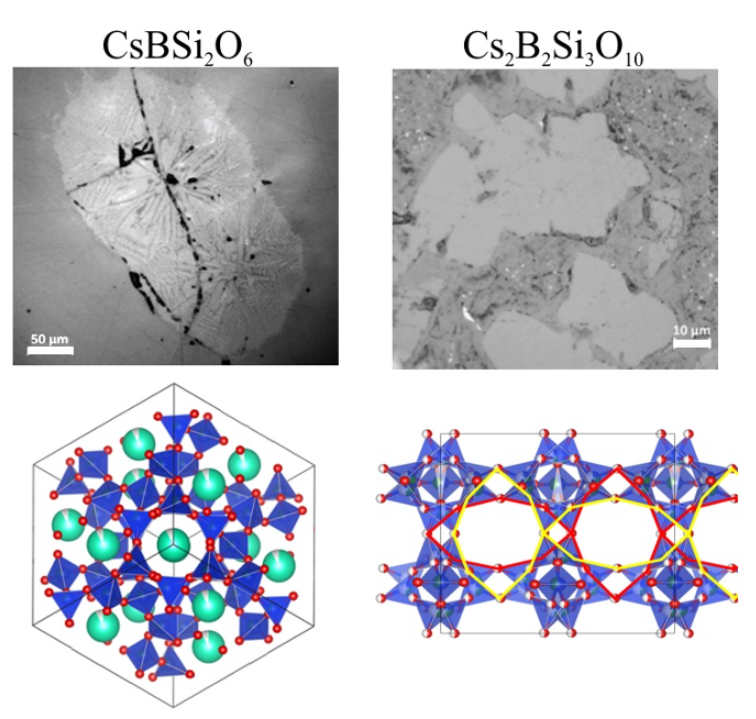
The research team synthesized glass samples with varying cesium and sodium content and employed multiple advanced analytical techniques, including X-ray diffraction, electron microscopy, Raman spectroscopy, and thermal analysis, to conduct detailed studies of the heat treatment processes of these samples under different conditions. Through secondary melting and slow cooling to 600°C, the team identified several ordered cesium compounds during glass crystallization, including a cubic cesium borosilicate compound CsBSi?O? (cesium leucite) with leucite stoichiometry, and an orthorhombic cesium borosilicate compound Cs?B?Si?O??, which was previously unknown. These findings not only enrich scientific knowledge in the field of borosilicate glass crystallization but also provide a theoretical basis for developing new glass-ceramic materials.
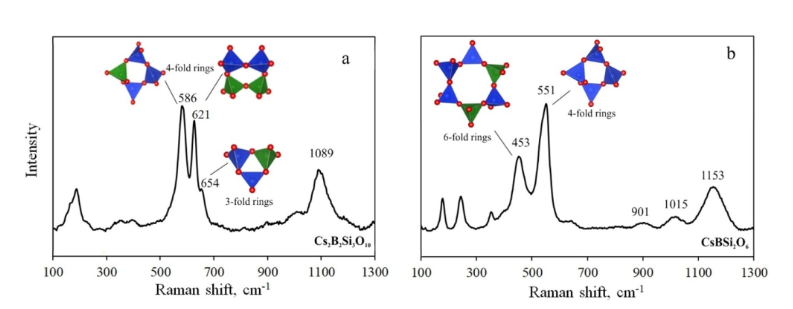
The study also revealed the significant impact of melt cooling rates on crystallization mechanisms, indicating that different cooling rates lead to crystals with varying compositions and shapes. This discovery provides possibilities for controlling melt fractionation processes and preparing glass-ceramic materials with specific properties. Olga Koroleva, Director of the Crystal Chemistry Laboratory at the Vernadsky Institute of Geochemistry and Analytical Chemistry of the Russian Academy of Sciences, stated: "Crystallization not only destroys the integrity of glass but can also serve as a tool for manufacturing robust and durable materials." This research opens new avenues for developing glass-ceramic materials capable of reliably retaining radionuclides and helps predict possible changes in existing glass matrices.
Source: China Nuclear Technology Network


Address:Ping An Fortune Center, Lize Financial Business District of Beijing